
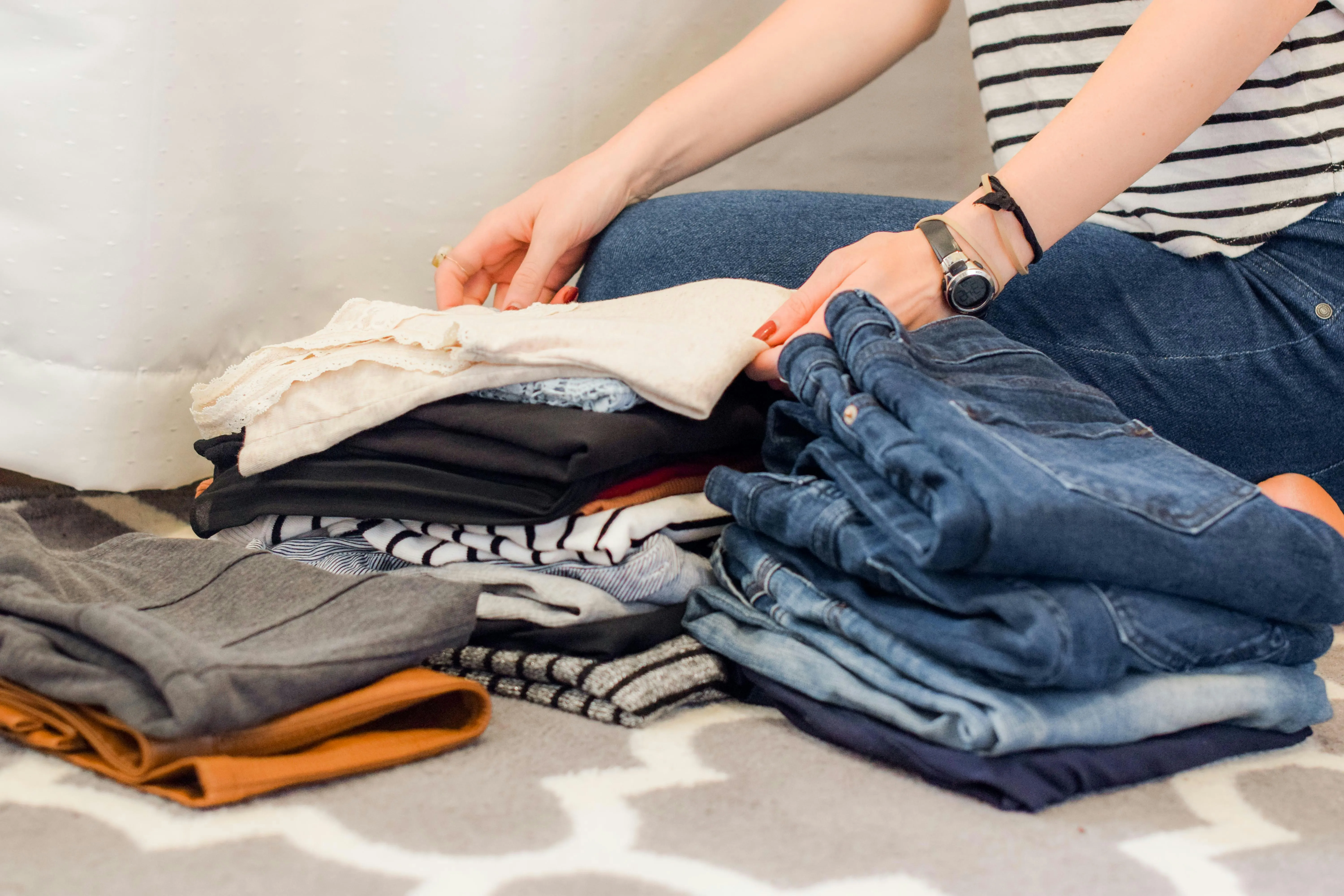
Packing clothes is one of the most rewarding parts of moving because it’s a chance to streamline your wardrobe for your new home. While a full closet might look like a puzzle at first, it's actually an opportunity to choose the perfect system that works for you. Whether you prefer the organized look of neat folds or the space-saving magic of rolling, the right method turns unpacking into a breeze, leaving your clothes fresh, wrinkle-free, and ready for your first day in a new space.
Step 1. Sort and declutter your wardrobe before packing
Before anything goes into a box, pull everything out and sort it into groups. Hanging items like suits and dresses go in one pile. Folded clothes like jeans and t-shirts go in another. Seasonal gear and delicate fabrics each get their own space too.
While you're sorting, set aside anything you haven't worn in the past year to donate. Fewer clothes means fewer boxes, which can lower your costs if you're paying by trailer size.
Step 2. Wash and clean clothes before moving
Clean clothes before packing them. Dirty fabrics can develop musty odors when sealed in boxes or bags for several days. This step matters even more if you're storing clothes between your move-out and move-in dates—soiled items attract pests and can grow mildew in enclosed spaces.
Step 3. Choose the best packing supplies for clothes
The container you choose depends on what you're packing and how far you're traveling:
- Cardboard boxes: Best for folded casual clothes
- Wardrobe boxes: Tall boxes with metal bars for hanging clothes on hangers
- Vacuum-sealed bags: Compress bulky sweaters and jackets (avoid for delicate knits)
- Suitcases: Use luggage you already own for clothes you want immediately
- Plastic bins: Clear bins work well for shoes and accessories
- Garbage bags: Budget-friendly option for everyday hanging clothes
Step 4. Fold or roll clothes for the best results
How you pack folded clothes affects both space and wrinkles. Flat folding works best for heavier pieces like sweaters and jeans. The army roll method—where you tightly roll each garment—saves space for t-shirts, casual tops, and underwear. For delicate items like silk blouses, use bundle wrapping by layering pieces around a central core.
Step 5. Pack hanging clothes without removing hangers
Several methods let you transport hanging clothes while keeping them ready to go straight into your new closet:
- Wardrobe boxes: Best for suits, formal dresses, and coats
- Garment bags: Add protection against dust and creasing
- Trash bags: Group 10 to 12 hangers together, pull a garbage bag over them from the bottom up, and tie the drawstrings around the hooks
- Portable garment rack: Roll directly into your trailer or truck
Step 6. Compress bulky clothes to save space
Vacuum-sealed bags can compress winter coats, puffy jackets, and heavy sweaters significantly, freeing up room in your trailer. This technique is especially helpful for long-distance moves where space is limited. Leave vacuum bags slightly loose for delicate knits to avoid permanent creases.
Step 7. Pack hangers, shoes, and accessories separately
Bundle empty hangers together with rubber bands or zip ties. Stuff shoes with socks or packing paper to help them hold their shape, then wrap nicer pairs individually. Keep jewelry with you during the move in small pouches or pill organizers. For necklaces, thread each chain through a drinking straw to prevent tangling.
Step 8. Keep a moving day bag with essential clothes
Pack a separate suitcase with everything you'll want before the boxes get unpacked. This bag stays with you—in your car, not buried in the trailer. Include outfits for the first two to three days, sleepwear, weather-appropriate layers, toiletries, medications, phone chargers, and valuables.
How to pack clothes for long-distance moving
Long-distance moves require extra protection. Seal boxes completely with packing tape and line them with plastic wrap to guard against moisture. Label everything clearly with contents and the destination room. Flex Moving's trailers include climate monitoring and GPS tracking, which provides peace of mind when your belongings are traveling across state lines.
How to pack clothes for storage before unpacking
If you're storing clothes temporarily, clean everything first and use moisture protection in each container. Breathable storage works best for delicates like wool and silk—avoid sealing them in plastic for extended periods. Flex Storage offers on-site storage at your home or at secure Flex facilities with on-demand delivery.
FAQs about packing clothes for moving
What is the 3-3-3 rule for packing clothes?
The 3-3-3 rule suggests packing three tops, three bottoms, and three pairs of shoes. While it's designed for travel, the same approach can help you decide what to include in your moving day essentials bag—enough variety without overpacking.
Is it better to pack clothes in boxes or bags when moving?
Boxes provide more protection and stack easily in a trailer, while bags work well for soft items and short moves. For long-distance moves, sturdy boxes or wardrobe boxes are typically the better choice because they protect against crushing and moisture.
How do you ship clothes to another state when moving?
The most reliable way is using a moving service with climate-monitored transport. Flex Moving coordinates long-distance transport with GPS-tracked trailers and dedicated support.
Same day moves available!
We'll get you moving today.